How to Transcribe Speech to Text with AI
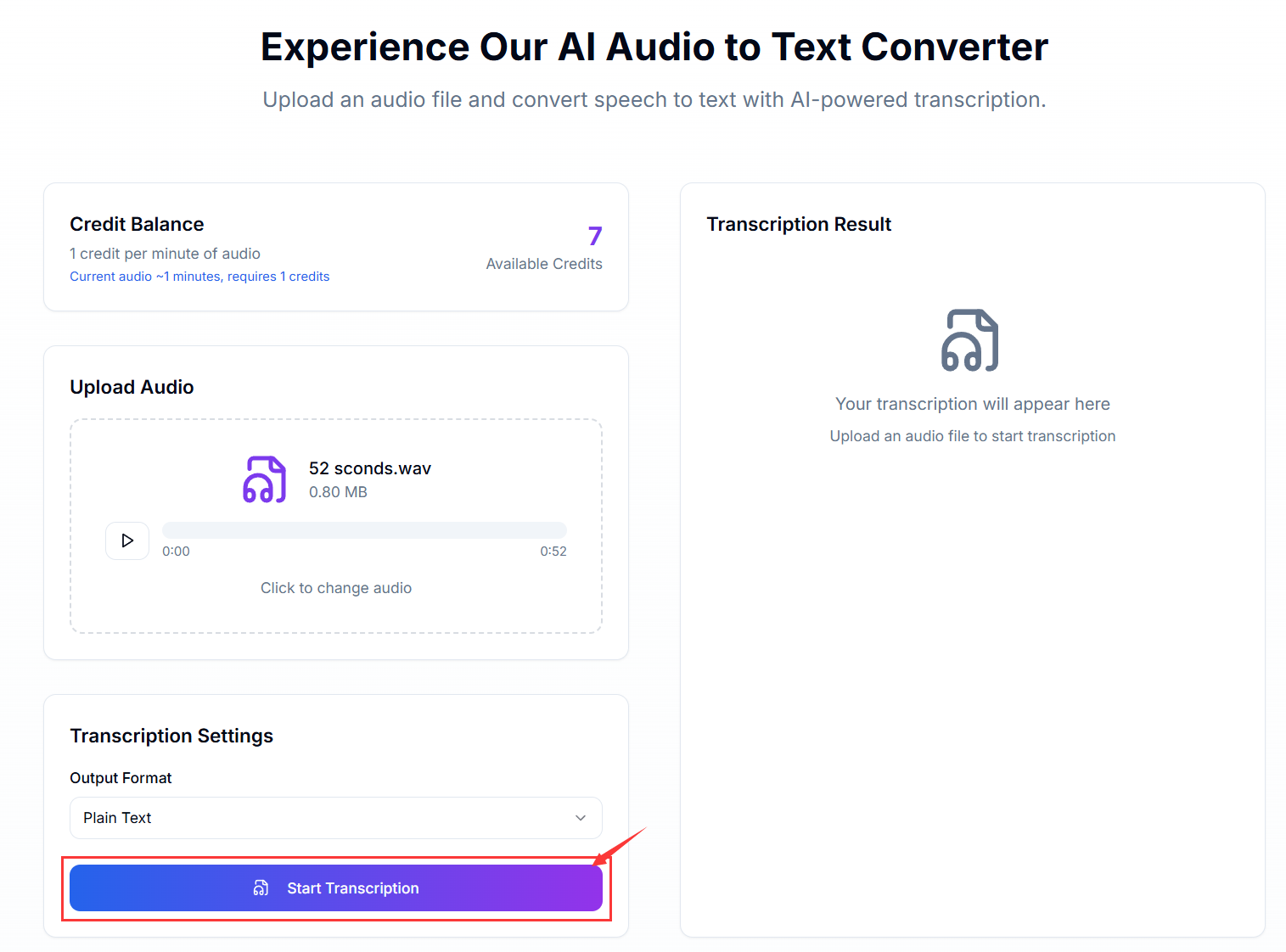
Turn Speech into Searchable Text
Speech is everywhere: meetings, interviews, lectures, and voice notes. With AI transcription, you can turn spoken audio into clean, searchable text for summaries, captions, or documentation in minutes. This guide outlines a practical workflow that keeps accuracy high and edits efficient.
Best Formats for Speech Uploads
Aidio is built for speech transcription and supports the most common recording formats. If your file matches one of these, you can upload it directly—no conversion required:
- MP3 - Great for podcasts or recordings with compressed audio
- WAV - Uncompressed audio when you need maximum quality
- M4A - Common format for mobile voice notes
- MP4 - Works well when your speech is in a video file
- WEBM - Lightweight web-friendly recordings
Your Speech-to-Text Workflow
Step 1: Prepare Your Speech Audio
Clear audio drives accurate transcripts. Ensure speech is loud and clean, keep background noise low, and avoid overlapping speakers. If needed, trim the file so only the useful sections are processed.
- Keep speakers close to the mic
- Reduce music or ambient sounds before uploading
- Split long recordings into chapters for faster review
- Use descriptive filenames like meeting-client-q4.mp3
Step 2: Upload or Record in Aidio
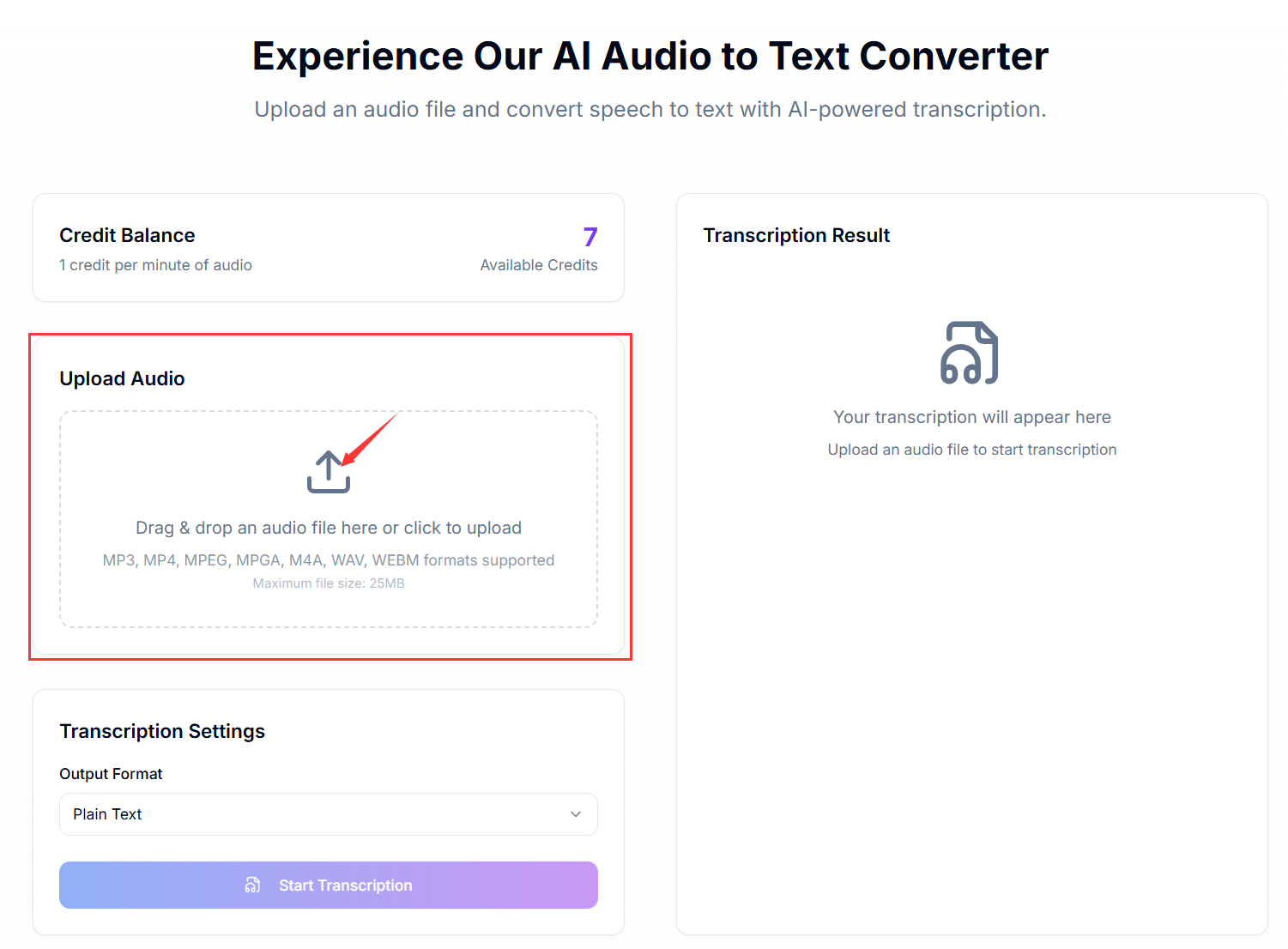
Drag and drop your audio into Aidio, or use real-time recording for instant capture. We process the audio automatically, so there are no extra conversion steps. Uploads stay secure and finish quickly.
- Drag your audio file into the upload area
- Or click the button to browse from your computer
- Use real-time recording when you want instant capture
- You’ll see a confirmation when the file is ready
Step 3: Let AI Transcribe
Once uploaded, the AI model transcribes speech, handles accents, and often separates speakers. Progress updates keep you informed while the audio is processed.
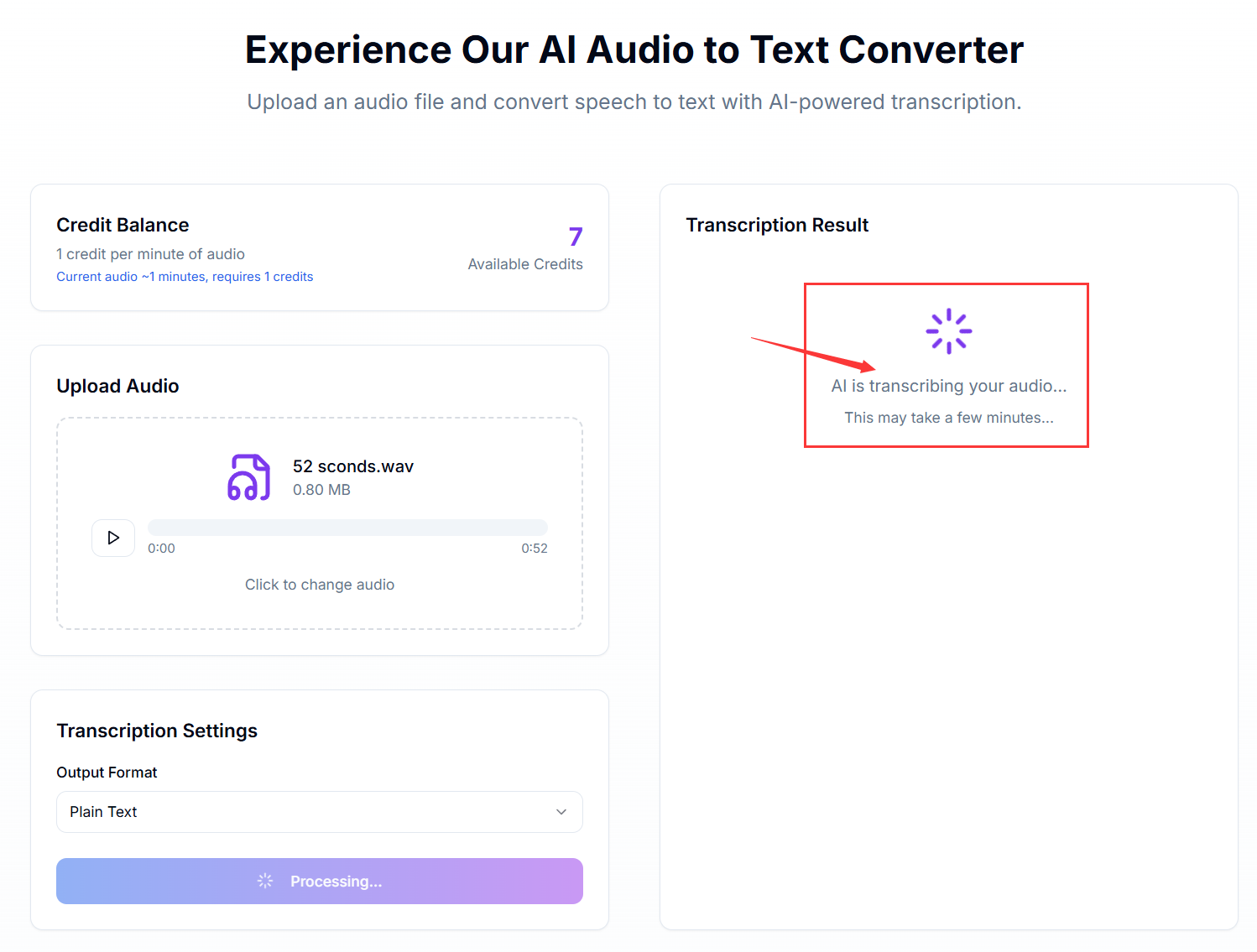
- Automatic transcription starts right after upload
- Speech in multiple accents is recognized accurately
- Processing time scales with audio length, but stays fast
- Review progress in real time in your dashboard
Step 4: Edit and Export Transcripts
Review the transcript alongside your audio. Fix names, jargon, or punctuation, then export clean text for documentation, summaries, or publishing.
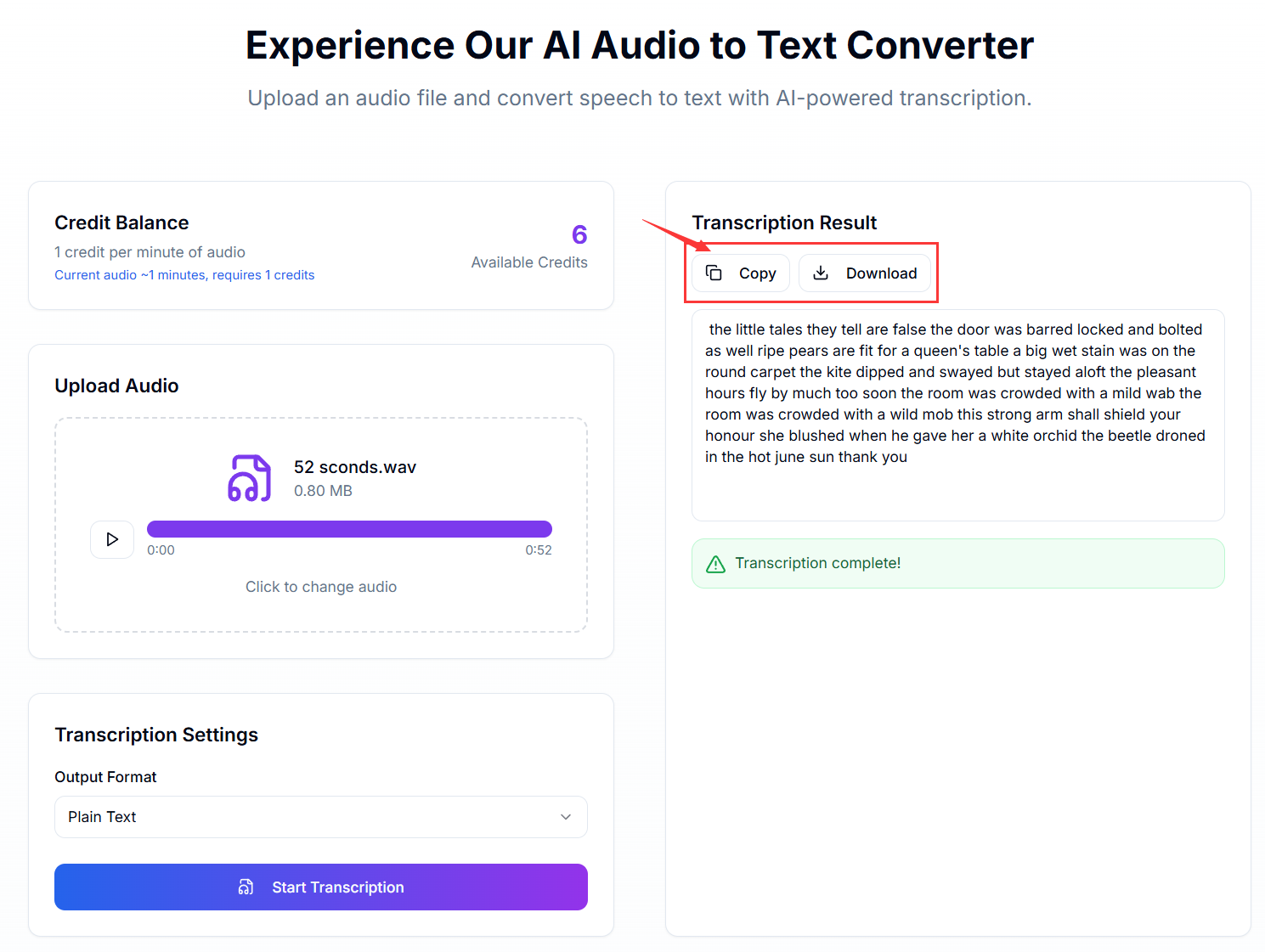
- Use the editor to sync audio and text quickly
- Correct brand names, guests, or technical terms
- Export to TXT, DOCX, or SRT/VTT subtitle files
- Reuse the text for meeting notes, blogs, or SEO descriptions
Pro Tips for Crisp Speech Transcripts
These quick wins improve accuracy and readability:
- Record in a quiet room and avoid cross-talk
- Use external mics for interviews or lectures when possible
- If the audio is long, process by chapter for easier edits
- Add timestamps for sections that matter to your audience
- Pair transcripts with summaries to improve SEO
Fixing Common Audio Issues
If something looks off, try these quick fixes:
- Re-export with higher audio bitrate if speech is muddy
- Trim silent or noisy intros/outros before upload
- If upload fails, check file size and your connection
- For heavy background music, lower the track volume first
Publish-Ready Speech Transcripts in Minutes
AI transcription makes spoken recordings searchable and easy to reuse. With clean audio prep, you get accurate transcripts, notes, and summaries without extra effort. Start with Aidio and turn your speech into text that people—and search engines—can use.